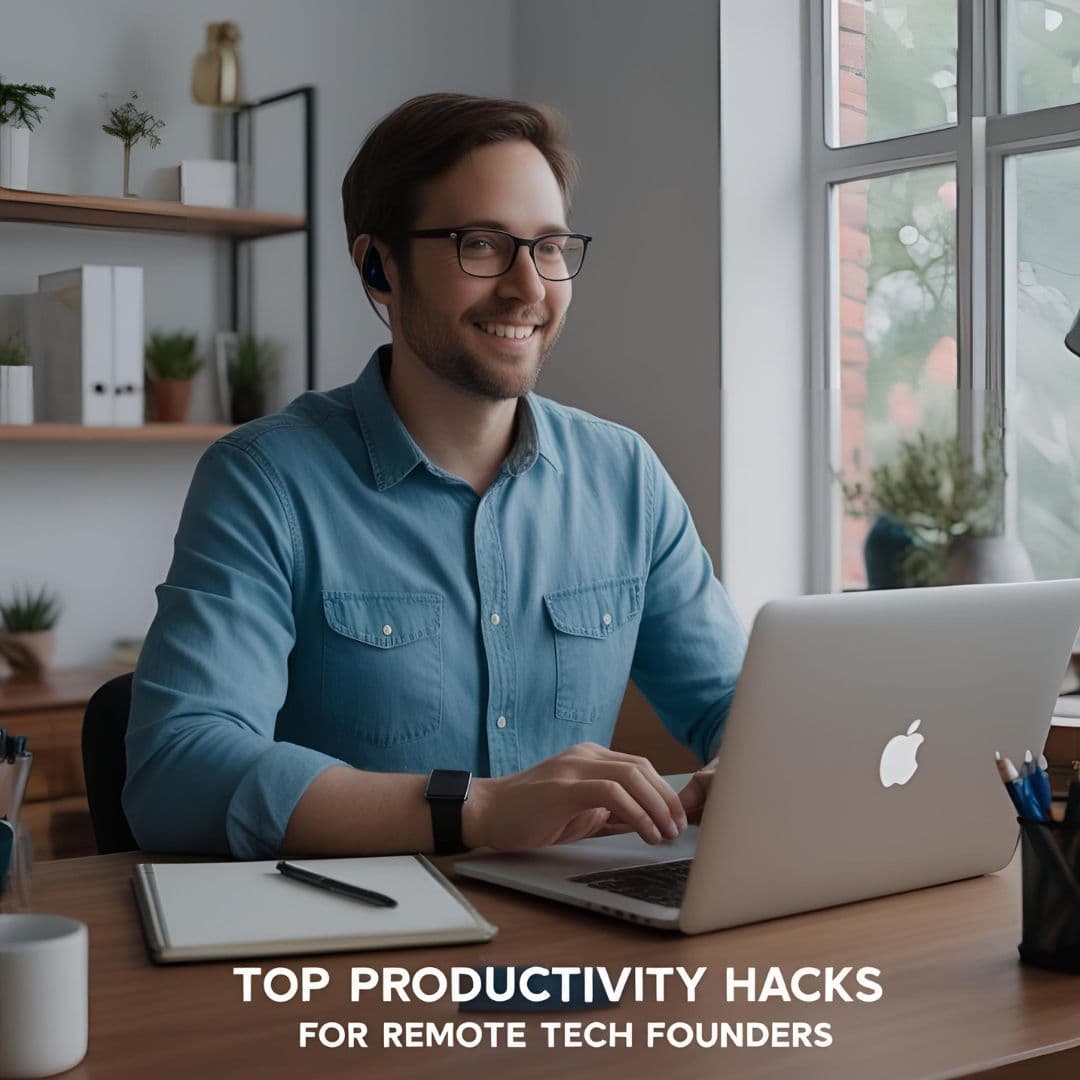
Top Productivity Hacks for Remote Tech Founders in 2026
Remote work has changed the way startups operate. For tech founders, working remotely offers flexibility, access to global talent, and lower operational costs. But it also comes with major challenges — distractions, burnout, endless meetings, communication overload, and difficulty maintaining focus.
Many remote founders feel busy all day but still struggle to complete meaningful work.
The real problem is not a lack of effort. It is a lack of systems.
In 2026, the most productive remote founders are not simply working harder. They are building smarter workflows, using async communication, protecting deep work time, and leveraging AI tools to eliminate unnecessary tasks. Modern remote work trends also show that founders are increasingly adopting automation and async-first operations to improve productivity and reduce burnout.
This guide covers practical productivity hacks that remote tech founders can use to stay focused, grow faster, and avoid the burnout trap.
Why This Matters
Remote startups move quickly, and founders often wear multiple hats:
- Product manager
- Marketer
- Developer
- Recruiter
- Customer support
- Salesperson
Without proper systems, remote work can easily become chaotic.
One of the biggest issues today is “digital presenteeism,” where founders feel pressure to always appear online and responsive. This often leads to overwork and reduced productivity.
At the same time, async-first teams are proving that fewer meetings and better documentation can significantly improve productivity and work-life balance.
Productivity is no longer about staying busy.
It is about:
- Protecting focus
- Managing energy
- Reducing distractions
- Building repeatable systems
- Prioritizing meaningful work
For startup founders, improving productivity directly impacts:
- Product quality
- Team performance
- Customer satisfaction
- Revenue growth
- Mental health
The better your productivity systems are, the easier it becomes to scale your business without constantly feeling overwhelmed.
The Biggest Productivity Challenges Remote Founders Face
Before fixing productivity problems, founders need to understand what is actually causing them.
1. Too Many Meetings
Many remote teams spend more time discussing work than actually doing work.
Daily standups, Zoom calls, Slack huddles, and status meetings can consume huge portions of the day.
Research around async-first work environments shows that reducing unnecessary meetings improves focus and execution.
Not every discussion needs a meeting.
Sometimes:
- A short Loom video
- A Notion document
- A Slack thread
- A project update
…is more effective than a 45-minute call.
2. Constant Context Switching
Founders often jump between:
- Emails
- Slack messages
- Development tasks
- Marketing
- Client calls
This constant switching destroys deep focus.
Studies around remote productivity continue to show that interruptions and notification overload significantly reduce efficiency.
Every interruption resets your mental momentum.
3. Tool Overload
Many founders believe adding more productivity tools will solve productivity problems.
But too many tools often create confusion instead.
Modern remote work research now highlights “app fatigue” as a major productivity issue in remote teams.
Using:
- Too many task managers
- Too many communication apps
- Too many AI tools
…can increase stress instead of improving productivity.
4. Lack of Boundaries
Remote founders often struggle to separate work from personal life.
When your office is always available, work never fully stops.
This leads to:
- Burnout
- Reduced creativity
- Decision fatigue
- Poor sleep
- Lower long-term productivity
Sustainable productivity requires clear boundaries.
5. Poor Async Communication
Remote teams fail when communication depends on immediate responses.
The best distributed startups are now shifting toward async-first communication models that reduce interruptions and improve clarity.
Async communication allows people to work deeply without constantly reacting to notifications.
Step-by-Step Tips
Step 1: Time Block Your Deep Work
Deep work is one of the most valuable productivity skills for founders.
Instead of multitasking all day:
- Schedule uninterrupted focus blocks
- Turn off notifications
- Close unnecessary tabs
- Put your phone away
Many productivity experts recommend 90–120 minute focus sessions for complex work.
Use this time for:
- Product development
- Strategy
- Writing
- Problem solving
Protect deep work aggressively.
Step 2: Default to Async Communication
Not every message needs an instant reply.
Create team expectations around:
- Response windows
- Documentation
- Written updates
- Threaded communication
Async-first teams reduce unnecessary interruptions and improve productivity across time zones.
Good async communication includes:
- Clear context
- Bullet points
- Action items
- Deadlines
The clearer your written communication is, the fewer meetings you need.
Step 3: Build a Simple Productivity Stack
Keep your tools minimal.
A simple remote founder setup could include:
- Notion for documentation
- Slack for communication
- Linear or Trello for tasks
- Google Calendar for scheduling
- ChatGPT for AI assistance
The goal is integration, not complexity.
Too many disconnected tools create friction and mental overload.
Step 4: Automate Repetitive Tasks
Remote founders waste huge amounts of time on repetitive admin work.
Automation tools can handle:
- Meeting scheduling
- Follow-up emails
- CRM updates
- Social media scheduling
- Customer onboarding
- Status reporting
Automation frees mental energy for higher-value work.
AI and workflow automation are becoming essential for remote-first startups in 2026.
Step 5: Create a Digital Shutdown Routine
One of the most underrated productivity hacks is ending your workday properly.
At the end of the day:
- Review unfinished tasks
- Plan tomorrow’s priorities
- Close work apps
- Log out of Slack
- Stop checking email
This creates mental separation between work and personal life.
Founders who never disconnect eventually lose productivity, creativity, and motivation.
Step 6: Prioritize Energy, Not Just Time
Many founders focus only on time management.
But energy management matters more.
Track:
- When you feel most focused
- When you feel mentally tired
- Which tasks drain your energy
Then schedule your most important work during your peak focus hours.
For many founders:
- Morning = strategy and deep work
- Afternoon = meetings and admin
- Evening = light planning or learning
Your schedule should support your natural energy patterns.
Common Mistakes
Working All Day Without Priorities
Being online all day does not mean being productive.
Without clear priorities, founders often spend time reacting instead of building.
Start every day with:
- 1–3 high-impact priorities
- Clear goals
- Defined outcomes
Treating Slack Like Real-Time Chat
Constant messaging destroys focus.
Teach your team:
- Not everything is urgent
- Async communication is acceptable
- Deep work matters
Fast replies should not be the definition of productivity.
Ignoring Burnout Signals
Burnout usually starts slowly:
- Difficulty focusing
- Constant fatigue
- Lack of motivation
- Increased frustration
Ignoring these signs can damage both health and business performance.
Remote work should create flexibility — not endless stress.
Overusing AI Without Review
AI tools are helpful, but founders should not blindly trust AI-generated outputs.
Always:
- Verify information
- Edit AI content
- Review automated workflows
- Maintain human judgment
AI should improve productivity, not reduce quality.
Trying to Copy Other Founders
Every founder has different:
- Energy levels
- Work styles
- Responsibilities
- Business goals
Do not blindly copy someone else’s productivity routine.
Build systems that fit your workflow and lifestyle.
Tools & Resources
Here are some practical tools remote tech founders commonly use in 2026.
Communication
- Slack
- Loom
- Discord
Project Management
- Notion
- Linear
- Trello
- ClickUp
AI Productivity
- ChatGPT
- Claude
- Perplexity
Automation
- Zapier
- Make.com
- n8n
Time Management
- Google Calendar
- Motion
- Sunsama
Focus & Deep Work
- Brain.fm
- Pomofocus
- Freedom App
The best productivity stack is not the biggest one.
It is the one your team actually uses consistently.
Final Thoughts
Remote work gives founders incredible freedom, but freedom without structure creates chaos.
The most successful remote tech founders in 2026 are building systems that:
- Protect focus
- Reduce distractions
- Improve communication
- Automate repetitive work
- Support long-term sustainability
Productivity is not about working 16 hours a day.
It is about consistently doing the right work without burning yourself out.
As remote-first startups continue growing globally, founders who master async communication, deep work, and smart automation will have a major advantage.
The goal is not simply to work more.
The goal is to build better.
Need a website or tech support? Visit my portfolio and contact me:https://sanzaythapa.com.np/