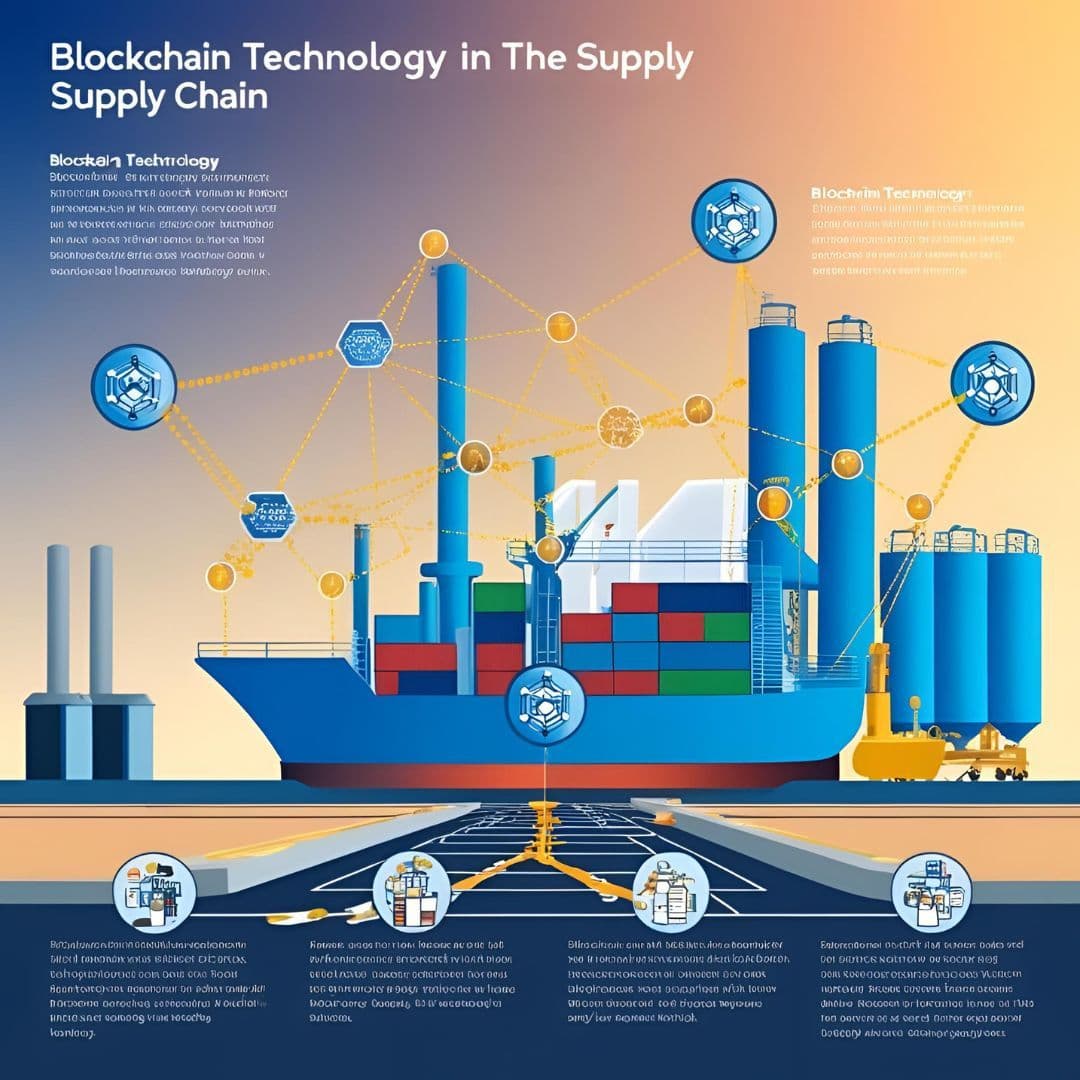
Blockchain in Supply Chain: Transparency and Efficiency in 2026
Modern supply chains are more complex than ever. Products now move across multiple countries, suppliers, warehouses, shipping companies, and retailers before reaching customers. While globalization has improved efficiency and scalability, it has also created major challenges around transparency, fraud prevention, product tracking, and operational efficiency.
Businesses today face increasing pressure from customers, regulators, and investors to provide clear visibility into:
- Product origins
- Ethical sourcing
- Delivery tracking
- Inventory movement
- Sustainability practices
This is where blockchain technology is becoming increasingly important.
In 2026, blockchain is no longer just associated with cryptocurrency. Companies worldwide are using blockchain systems to improve supply chain transparency, automate workflows, reduce fraud, and increase trust between multiple stakeholders. Recent industry reports show that blockchain supply chain solutions are rapidly moving from pilot programs into enterprise-scale adoption.
For startups and businesses, blockchain creates opportunities to build more transparent, secure, and efficient supply chain systems.
This guide explores how blockchain is transforming supply chain management in 2026 and why it matters for modern businesses.
Why This Matters
Traditional supply chains often suffer from:
- Fragmented data systems
- Manual paperwork
- Limited transparency
- Delayed tracking updates
- Counterfeit products
- Fraud risks
- Communication inefficiencies
Many businesses still rely on disconnected systems such as spreadsheets, emails, and siloed databases, making it difficult to maintain accurate records across the entire supply chain.
Blockchain technology addresses these issues by creating:
- Shared digital ledgers
- Immutable records
- Real-time visibility
- Automated verification systems
- Transparent transaction histories
According to recent supply chain research, blockchain technology improves trust, accountability, traceability, and operational efficiency across logistics networks.
This matters because modern businesses increasingly need:
- Faster product tracking
- Reliable audit trails
- Better compliance systems
- Ethical sourcing verification
- Secure data sharing
Industries such as:
- Food
- Pharmaceuticals
- Manufacturing
- Fashion
- Logistics
- Agriculture
…are already adopting blockchain-based supply chain solutions.
The companies that improve transparency and efficiency today may gain major competitive advantages in the future.
How Blockchain Improves Supply Chain Transparency and Efficiency
1. Real-Time Product Traceability
One of the biggest advantages of blockchain is traceability.
Blockchain systems allow businesses to track products from origin to final delivery using immutable digital records.
Each movement can be recorded securely, including:
- Manufacturing
- Shipping
- Warehouse transfers
- Customs processing
- Retail delivery
Because blockchain records cannot easily be altered, businesses gain more trustworthy tracking systems.
Recent blockchain supply chain reports highlight traceability as one of the primary drivers of adoption in 2026.
Why This Matters
Traceability helps businesses:
- Detect fraud
- Reduce counterfeit products
- Improve recalls
- Verify sourcing claims
- Increase customer trust
For example, food companies can track contaminated products quickly instead of recalling entire inventories unnecessarily.
2. Improved Transparency Across Multiple Stakeholders
Supply chains involve many participants:
- Suppliers
- Manufacturers
- Shipping companies
- Distributors
- Retailers
- Regulators
Traditional systems often create information silos where each company controls separate data systems.
Blockchain creates a shared ledger accessible to authorized participants.
This improves:
- Visibility
- Coordination
- Accountability
- Trust
Industry analysis shows that blockchain networks reduce reconciliation issues by allowing stakeholders to work from a shared source of verified information.
Practical Benefits
Businesses can:
- Verify shipment histories
- Monitor inventory movement
- Reduce disputes
- Improve compliance reporting
Transparency becomes especially valuable in industries with strict regulations and ethical sourcing requirements.
3. Fraud Prevention & Counterfeit Detection
Counterfeit products remain a massive global problem, especially in:
- Luxury goods
- Pharmaceuticals
- Electronics
- Food supply chains
Blockchain helps create tamper-resistant product histories that improve authenticity verification.
Research shows blockchain-based tracking systems significantly improve counterfeit detection and supply chain security.
Examples
Blockchain systems can:
- Generate product verification records
- Link products to QR codes
- Verify ownership transfers
- Track manufacturing origins
Customers and businesses can verify whether products are authentic by checking blockchain records.
This increases trust and reduces fraud risks.
4. Smart Contract Automation
Smart contracts are automated blockchain-based agreements that execute actions when conditions are met.
In supply chains, smart contracts can automate:
- Payments
- Shipment approvals
- Inventory updates
- Customs verification
- Supplier agreements
This reduces manual paperwork and administrative delays.
Recent blockchain supply chain studies show smart contract automation improving operational efficiency and reducing transaction disputes.
Benefits of Automation
Businesses can:
- Reduce delays
- Improve transaction speed
- Minimize human error
- Lower operational costs
Automation also improves scalability for growing businesses.
5. Better Sustainability & ESG Tracking
Modern consumers increasingly care about:
- Ethical sourcing
- Environmental impact
- Sustainability practices
Blockchain allows businesses to provide verifiable sustainability records.
Companies can track:
- Carbon emissions
- Raw material origins
- Supplier compliance
- Environmental certifications
Recent startup activity shows growing demand for supply chain transparency tools connected to ESG and sustainability reporting.
Why This Matters
Customers increasingly want proof—not just marketing claims.
Blockchain helps businesses provide verifiable evidence of:
- Fair trade sourcing
- Sustainable practices
- Ethical manufacturing
This builds stronger consumer trust.
6. Integration With AI & IoT
One of the biggest trends in 2026 is combining blockchain with:
- AI systems
- IoT devices
- Smart sensors
IoT devices can automatically collect real-time supply chain data such as:
- Temperature
- Location
- Inventory levels
- Shipment conditions
Blockchain stores this data securely while AI analyzes it for insights.
Recent industry reports show increasing convergence between blockchain, AI, and IoT in modern logistics systems.
Example Applications
- Smart cold-chain monitoring
- Automated shipment alerts
- Predictive logistics systems
- Real-time compliance tracking
This combination improves both efficiency and decision-making.
Step-by-Step Tips
Step 1: Identify Supply Chain Problems First
Do not implement blockchain just because it sounds innovative.
Start by identifying:
- Fraud risks
- Tracking problems
- Manual bottlenecks
- Transparency gaps
- Compliance challenges
Technology should solve real operational problems.
Step 2: Start With a Small Pilot Program
Many successful blockchain implementations begin with limited use cases.
Examples:
- Product traceability
- Shipment tracking
- Supplier verification
- Inventory visibility
Start small before scaling company-wide.
Step 3: Choose Permissioned Blockchain Systems
Most enterprise supply chains prefer permissioned blockchains rather than fully public systems.
Permissioned systems provide:
- Better privacy
- Controlled access
- Improved governance
- Enterprise security
Industry reports show private blockchain systems dominating enterprise supply chain adoption in 2026.
Step 4: Focus on Data Accuracy
Blockchain records are only reliable if the original data is accurate.
Businesses must ensure:
- Proper data collection
- Reliable IoT integration
- Verification processes
- Consistent updates
“Bad data in” still creates “bad data out.”
Step 5: Train Teams Properly
Supply chain innovation often fails because teams do not fully understand new systems.
Educate teams about:
- Blockchain basics
- Workflow changes
- Security practices
- Data management
Strong adoption requires strong training.
Common Mistakes
Using Blockchain Without Clear Business Value
Not every supply chain needs blockchain.
Sometimes simpler systems work better.
Businesses should only adopt blockchain when it improves:
- Transparency
- Traceability
- Trust
- Efficiency
Ignoring Scalability Challenges
Blockchain systems can become inefficient if not designed properly.
Research continues highlighting scalability as one of the major technical challenges for blockchain supply chains.
Businesses should carefully evaluate:
- Transaction volume
- Infrastructure costs
- Integration complexity
before scaling systems aggressively.
Overlooking Privacy Concerns
Supply chains often involve sensitive business information.
Companies must balance:
- Transparency
- Data privacy
- Trade secrets
- Regulatory compliance
Privacy-preserving blockchain systems are becoming increasingly important in enterprise supply chains.
Expecting Instant Transformation
Blockchain adoption takes time.
Successful implementation requires:
- Process redesign
- Stakeholder coordination
- System integration
- Training
Supply chain transformation is gradual—not immediate.
Ignoring User Experience
Many blockchain systems fail because they are too complicated for everyday users.
The best solutions simplify:
- Tracking
- Verification
- Reporting
- Collaboration
Technology should improve usability—not increase complexity.
Tools & Resources
Here are useful blockchain supply chain platforms and resources businesses explore in 2026.
Blockchain Platforms
- Hyperledger Fabric
- Ethereum
- Polygon
- VeChain
Supply Chain Solutions
- IBM Food Trust
- OriginTrail
- Morpheus.Network
- Provenance
Smart Contract Tools
- Hardhat
- Remix IDE
- Foundry
Analytics & Monitoring
- Grafana
- Dune Analytics
- Chainlink integrations
Learning Resources
- Coursera blockchain courses
- Blockchain Council
- Hyperledger documentation
The best blockchain solution depends on your business goals, scalability requirements, and industry regulations.
Final Thoughts
Supply chains are becoming increasingly complex, global, and data-driven.
In 2026, businesses need better systems for:
- Transparency
- Trust
- Traceability
- Security
- Operational efficiency
Blockchain technology is helping companies solve many of these challenges by creating shared, tamper-resistant systems that improve visibility across supply chains.
The biggest opportunities are not necessarily in cryptocurrency.
They are in practical business applications such as:
- Product tracking
- Smart contracts
- Sustainability verification
- Fraud prevention
- Supply chain automation
The companies that succeed with blockchain will not simply adopt trendy technology.
They will focus on:
- Solving real operational problems
- Improving trust
- Increasing efficiency
- Creating better customer experiences
Blockchain is becoming less about hype and more about infrastructure.
And supply chain management is one of its most practical and valuable use cases.
Need a website or tech support? Visit my portfolio and contact me:https://sanzaythapa.com.np/